
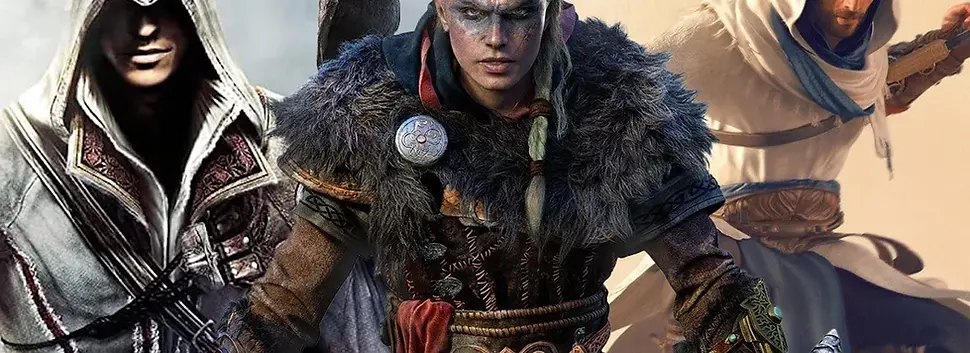
The Franchise Saving Reboot Of Assassin's Creed
Breakdown
When the Assassin’s Creed series was in a tough position following the lukewarm sales to the 2015 Assassin’s Creed Syndicate, many believed the series had run its course and was out of steam. Ubisoft listened to this feedback, and chose to completely reinvent the franchise after years of a similar formula, when they famously took an off-year in 2016, the first year they hadn’t released a new title since 2008 following their annual release schedule. It was a big deal when Ubisoft chose to take the time necessary to reassess the franchise, and how to avoid the mistakes seen in the recent years prior to their 2016 hiatus. Ubisoft had a lot of fans to please, and many hoped the franchise having a rare off-year could be beneficial to the series, and many complimented the developers at Ubisoft for being willing to step away when the time was right, but come back with something far stronger.
Ubisoft used their break in 2016 to reevaluate the franchise, and figure out the next steps to take it all these years into its existence with major success. Departing this familiar strategy was risky, but an essential step to keeping the Assassin’s Creed series alive and well. Ubisoft chose to take their franchise in the form of a complete overhaul of every aspect the series had once seen. They chose to adapt it into a full-fledged RPG (role playing game). This was an important step forward for the franchise, as the original Assassin’s Creed games were quite far from RPG territory, so they knew they had to nail this reboot, otherwise they could lose the faith of their fans and continue the downward trend the series saw before taking a break. Ubisoft reinvented the Assassin’s Creed games and it still follows a similar formula to this day, several years later.

Ubisoft tried their luck with an RPG title in the franchise with 2017’s Assassin’s Creed Origins, and it paid off bigger than they could have imagined. The game was instantly well regarded, and many fans loved so many new aspects to Origins that made it feel like the ultimate Assassin’s Creed game. Ubisoft chose to transform the combat and stealth completely, something that had not been heavily changed in the entirety of the franchise dating back to its creation. The developers chose to take a path where the player had more control over the game rather than the combat mechanics being predictable and in some ways even broken. Ubisoft made it so fighting enemies felt more real and required more skill, rather than having the player hold a single button to defeat enemies. Origins made it so there were other ways to face an enemy. You could use different weapons including swords, a bow, blunt weapons, even throwables to aid you against tough opponents. This level of freedom in Origins was so well received, that it was no surprise Ubisoft chose to stick with this formula that resulted in both positive reviews and great sales numbers.
Ubisoft took what was loved in Origins and expanded it even further in 2018’s Assassin’s Creed Odyssey, which was a game that continued the same formula, but also added in its new unique elements. Ubisoft knew they succeeded in regaining the trust of gamers, while making the Assassin’s Creed series as strong as it's ever been. Odyssey was another huge success for Ubisoft both critically and financially. The game sold well and it was nominated for multiple awards including a Game of the Year nomination at the 2018 Game Awards. It was proof that many loved this new direction the developers took with the franchise. That they were willing to take a significant risk, like this and trusted their instincts and added new life into a series which was already vintage. Odyssey took everything people loved in Origins and made everything even better. It introduced fun new elements, and expanded further on their transformation to an RPG game.

Ubisoft doubled-down on their approach, and implemented similar features into the next game, 2020’s Assassin’s Creed Valhalla - which is also the best selling entry in the franchise - and last year's Assassin’s Creed Shadows. Both were considered continuations of a similar formula. Of course, each game offered something entirely new, but the concept remained the same. The RPG era games did an excellent job, in giving the Assassin’s Creed franchise meaning, and introducing the franchise to an entirely new group of fans. Having a formula that created so many new fans, was what Ubisoft desperately needed after their 2016 hiatus. They hit the jackpot with their change of direction to the series, and it has resulted well in all aspects.
There are many fans who distinguish the original games as a much different era for Assassin’s Creed, over the reboot and new direction introduced with Origins in 2017. Some fans did not welcome the RPG elements too kindly, as there was an argument that the franchise abandoned its roots too heavily. Of course, many of these fans had those opinions when the reboot first happened, all these years later a lot of the fanbase has come around and joined the group, of those who love the current state of the franchise. It was expected there would be fans who felt that the series had strayed too far from its roots, but the success the series found after the reboot, is proof that although it could be unpopular at first, the long term plan is most important, and many fans who showed initial resentment, have since changed their minds and embraced the franchise for what it is once again.

All in all, Ubisoft took a serious gamble rebooting a franchise that has become such a tentpole in the gaming world, but they knew such a move was necessary in order to remain alive. It was a risky decision as the series had become so recognised for its original formula, that changing it as a whole would either work or not work, with no in between. Ubisoft was right to trust their judgement and understand the future of the franchise needed saving, they delivered exactly that when the reboot happened. In the end, Ubisoft was smart to not ignore that things and people change over time, and along with the world changing, the Assassin’s Creed series had to change with it.

About the Author
Hayden is a passionate Freelance Writer based in South Carolina who joined TOWCB's Writing Team in 2020 during the Covid-19 Pandemic, writing articles on all things Assassin's Creed Valhalla. He left the group to focus on studies, joining our Alumni program, but triumphantly returned with fresh ideas in 2024 to pick up where he left off, only this time covering Assassin's Creed Shadows.
In 2025, Hayden took on the position of Team Leader for TOWCB's Writing Team, overseeing article releases, assisting with recruitment and providing assistance with internal operations.
Hayden Bird